

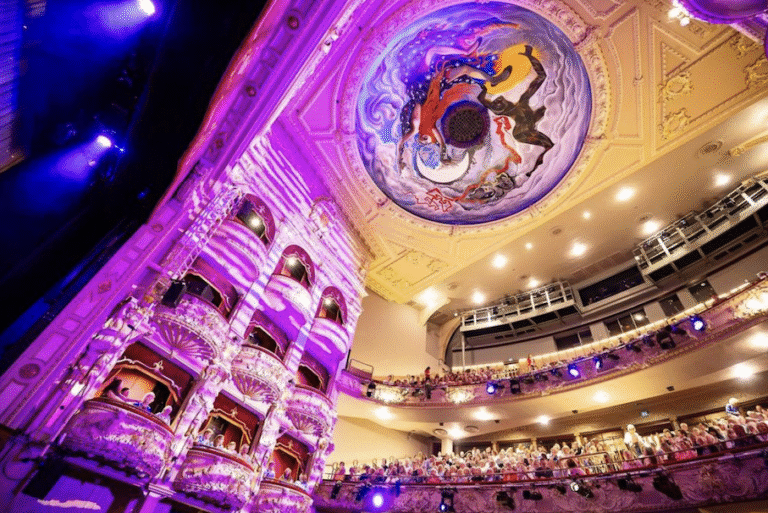
This month marks the return of audiences to the King’s Theatre in Edinburgh, UK, following a major redevelopment encompassing accessibility improvements and new public, backstage and creative spaces.
Managed by theatre charity Capital Theatres, the Grade A listed theatre has undergone a comprehensive redevelopment that preserves its Edwardian character while creating a venue fit for future generations of audiences, artists and communities.
The project has delivered step-free access throughout the building, a new level stage, expanded backstage facilities, upgraded technical infrastructure, a dedicated Creative Engagement Studio and significantly improved public spaces. More than 1,370 people from over 160 organisations contributed to the 1,252-day redevelopment.
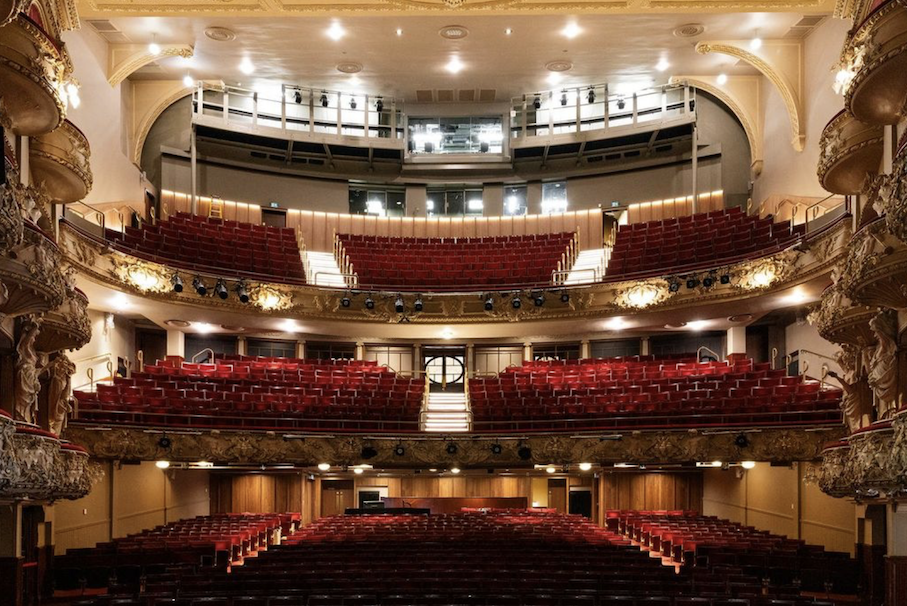
ABOVE: The redevelopment transforms The King’s Theatre into one of the UK’s most accessible heritage centres. Image: Capital Theatres, Edinburgh.
“Today is a landmark moment for the King’s Theatre and for everyone who has supported its journey back to the heart of Edinburgh’s cultural life,” said Fiona Gibson, CEO of Capital Theatres. “We’ve carefully preserved everything people love about this extraordinary building while transforming it for the future.”
“The King’s is now one of the UK’s most accessible Edwardian heritage buildings, ready to welcome more people than ever before, creating new possibilities for audiences, artists and communities,” Gibson continued. “The new level stage, enhanced technical facilities and improved backstage access strengthen its position as one of Scotland’s leading venues for touring productions, co-producing and commissioning, ensuring we are ready to bring the very best live performances to Edinburgh for generations to come.”
Accessibility has been central to the redevelopment. New lifts now provide step-free access from street to seat and stage for the first time. The auditorium now includes eight dedicated wheelchair spaces in the Stalls and two in the Dress Circle. Also in the Stalls, 40 seats with hinged armrests enable easy transfer from a wheelchair, alongside 12 wider seats. Accessible toilets are available on every level alongside a new Changing Places toilet. Backstage improvements include a platform lift, accessible dressing room and accessible toilet.
The transformation also enhances the theatre’s technical capabilities. A new level stage, an extended fly tower and upgraded technical infrastructure enable the King’s to host larger and more technically demanding touring productions, strengthening Edinburgh’s position as a year-round destination for world-class live performance. The improvements are also aimed at achieving shorter get-in and get-out times and providing a better working environment for performers, visiting companies and technical crews.
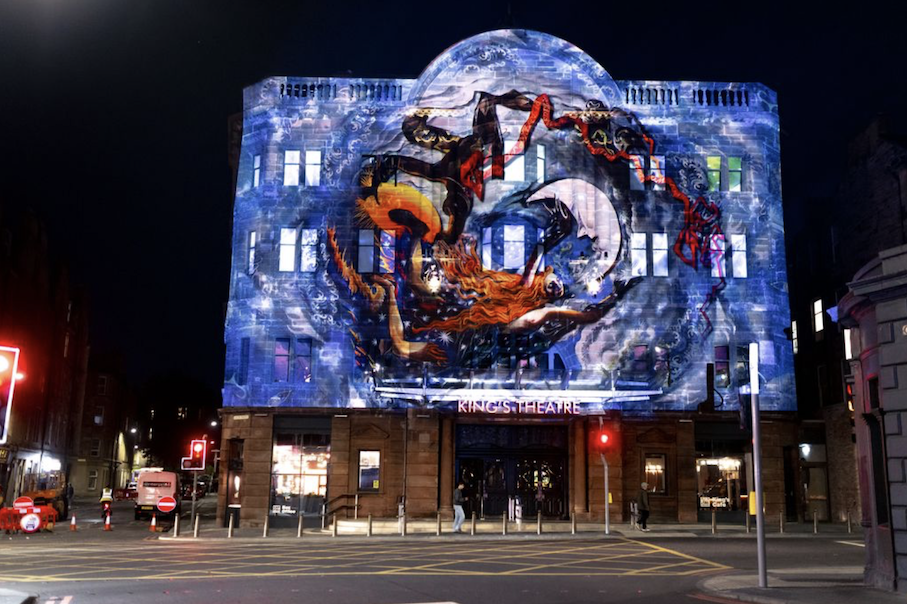
ABOVE: Video projections on the facade celebrated the re-opening. Image: Ryan Buchanan.
Beyond performance, the redevelopment creates new opportunities for community engagement. A dedicated Creative Engagement Studio will host workshops and educational activities, while a new street-level café and redesigned public areas invite visitors into the building throughout the day.
Originally opened in 1906, the King’s Theatre remains the only surviving working theatre designed by architects Swanston and Davidson. Throughout the redevelopment, historic features have been carefully conserved, while a new digital People’s Archive celebrates more than a century of memories through photographs, programmes and personal stories.
The reopening marks the beginning of a new chapter, with a programme spanning the Edinburgh International Festival, contemporary dance, new Scottish theatre, major touring productions and the return of the King’s celebrated pantomime, reaffirming its place as one of Scotland’s leading live performance venues.
The transformation was designed by Bennetts Associates and delivered by Robertson Construction Central East, with funding from the City of Edinburgh Council, the Scottish and UK governments, the National Lottery Heritage Fund, trusts and foundations, corporate supporters and more than 16,000 individual donors.